

- libertad de comnciencia en iosraeñ. es el pais más libre de pensamiento que existe en el mundo y eso le avala
- es frecuente trambien en israel el suicidio entre la tropa
- OBSERVACIÓN QUI POTEST CAPERE CAPIAT
- los judios saben reirse de si mismos y del holocausto. qué seria de nosotros sin hitler y sin israel
- SUICIDIO ASISTIDO EN ISRAEL. MISTERIOSO Y ENTRAÑABLE NACIÓN A LA CUAL AMAMOS Y NO COMPRENDEMOS
Posted: 29 Jul 2019 02:44 AM PDT What the Pew report got wrong about religious restrictions in Israel Israeli policemen take their positions during a march by Jewish boys from the Damascus Gate to the Western Wall to mark the 51st anniversary of the reunification of Jerusalem, May 13, 2018. (Ilia Yefimovich/Getty Images) ADVERTISEMENT NEW YORK (JTA) – A recently released Pew Research Center report about global restrictions on religion focuses mostly on discrimination against, and the persecution of, various religious groups in different countries. Jews are prominent targets as always, “harassed in 87 countries … the third-highest figure for any religion.” But the report also turns a spotlight on Israel, yielding headlines like the Jewish Telegraphic Agency’s “Israel has almost as many religious restrictions as Iran.” The headline and the report beneath it were picked up by myriad media. But the Pew report, by not differentiating between the types of “religious restrictions” or “hostilities,” might lead readers to false conclusions. The report ranks Israel’s “social hostilities related to religious norms” as “very high,” following more than two dozen countries in the “very high” category like China and Iran, and its “governmental restrictions” on religion as “high,” behind countries such as Afghanistan, Iraq and Kuwait. Pew also cites Israel as having the sixth highest level of “interreligious tension and violence,” presumably referring to Arab Muslim attacks on Jews and vice-versa. When Israel is placed in the company of such countries, an uninformed reader might be led to imagine Israel as a violent Jewish theocracy, with rival religious groups shooting it out on the streets of Jerusalem, the mass repression of non-Jewish citizens and the jailing of people for practicing their faiths. But no such things were cited, of course, since no such things actually happen. The only specific description of religious restrictions that happen in Israel contained in the 126-page report was a single sentence: “In Israel, drivers who operated cars near ultra-Orthodox Jewish neighborhoods on the Sabbath reported incidents of harassment, including name-calling and spitting, by ultra-Orthodox residents.” Such rude behavior should be beneath any Jew, certainly any Jew claiming to be religious. But such behavior, not sanctioned in any way by the state or the rabbinate, does not merit Israel’s inclusion among a list of countries where religious minorities are interned, as in China, or where police have raided religious minorities’ homes and places of worship, as in Iran, or where the Islamic State is currently active. Decades ago, when I was studying in a yeshiva in such a neighborhood, Israelis who were not Sabbath observant would sometimes purposely drive through the main street, where people were enjoying peaceful Sabbath strolls, seeking to goad the locals. No one was spat upon, but angry calls of “Shabbos!” were indeed shouted at the visitors. The late Bostoner Rebbe, Rabbi Levi Yitzchak Horowitz, once told a writer that “Shabbos” was not a word ever meant to be shouted. But even ill-mannered reactions to provocations are hardly the stuff of “religious hostility.” As to “governmental restrictions on religion,” the report makes reference to the fact that “all countries in [the Middle East] defer in some way to religious authorities or doctrines on legal issues.” In Israel, this refers to the fact that the haredi Orthodox Chief Rabbinate sets the terms of official religious life and Jewish personal status, from determining whether or not a certain restaurant is kosher to whether or not two individuals can marry there. Marriages of any sort that take place outside the country, though, are legally recognized, leading some Israelis to take quick trips to Cyprus to obtain marriage licenses. There is indeed opposition among some Israelis to the power afforded the country’s official Rabbinate in matters of Jewish personal status. But many Jewish Israelis – a majority of whom are either haredi (“ultra-Orthodox”), dati (nationalist religious) or “traditional” Jews – accept the need for a single, central standard-bearer regarding conversion, marriage and divorce. The Chief Rabbinate’s fealty to traditional norms of halacha (Jewish religious law) effectively rejects the legitimacy of conversions and divorces overseen by non-Orthodox rabbis, which is seen by non-Orthodox Jews in the U.S. as outrageous. “Why,” they ask, “should Reform, Conservative, Reconstructionist or Humanistic Jewish rituals not enjoy the same respect in Israel as Orthodox ones?” From a non-Orthodox perspective, it’s an entirely valid question. And we Orthodox Jews need to understand why fellow Jews are so hurt by the Chief Rabbinate’s approach to personal status issues. But there’s something non-Orthodox Jews also need to understand: The Chief Rabbinate’s position doesn’t stem from any animus (despite some uncouth comments by Israeli politicians and rabbis who seem to have never met a Jewishly committed non-Orthodox Jew). It stems from a commitment to the religious laws that have preserved the Jewish nation for millennia. In Israel, the existence of the Chief Rabbinate helps ensure that conversions and divorces meet standards that all Jews can accept, preventing the sort of schism that, tragically but undeniably, has developed here in the United States as a result of the dire sociological upshot of non-halachic conversions and divorces. When it comes to some issues, unfortunately, accommodating both sides simply isn’t possible. But what’s always possible, and vital here, is for each side to make an honest effort to at least understand the other. Pew’s deep dive into global religious restrictions is an important endeavor, but more context is necessary to understand what it shows about Israel. If nothing else, its report should inspire us to work toward understanding one another, despite our deep disagreements. ESPAÑA MI NATURA |
es frecuente trambien en israel el suicidio entre la tropa Posted: 29 Jul 2019 02:40 AM PDT 6 years on, the parents of a Jewish Army veteran who committed suicide are still fighting for change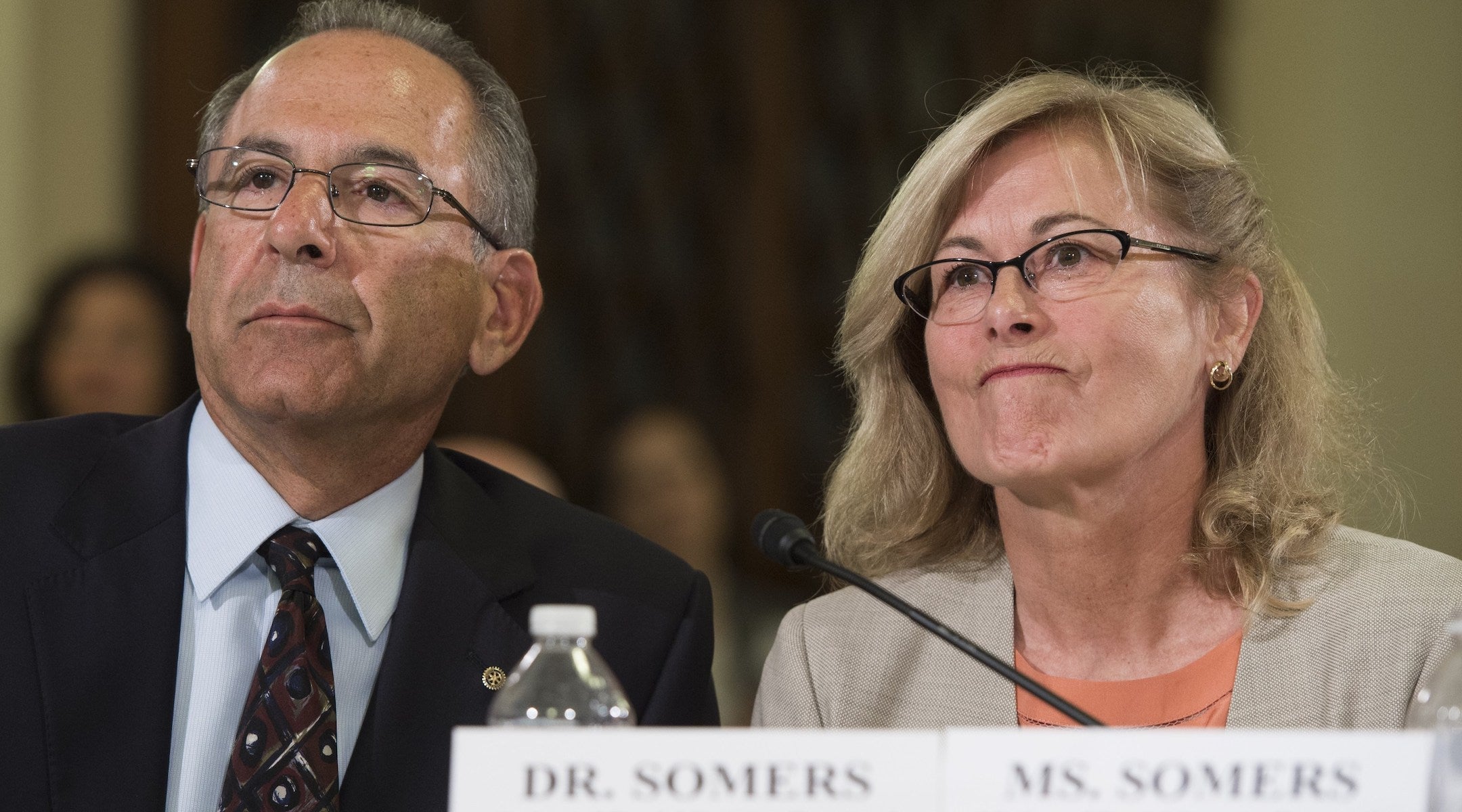 Howard and Jean Somers testify about their son Daniel’s suicide before a U.S. House Committee hearing about the Veterans Affairs’ mental health care procedures, July 10, 2014. (Saul Loeb/AFP/Getty Images) ADVERTISEMENT (JTA) — In 2007, Sgt. Daniel Somers returned home after two tours in Iraq, where he worked in intelligence and special operations. For years he struggled to get on with his life, but his Army service had left him with deep scars, including post-traumatic stress disorder, traumatic brain injury and fibromyalgia. With time, his mental health issues worsened, and he started experiencing nightly panic attacks and auditory hallucinations. Six years after his service ended, Daniel shot himself in the head just blocks from his home in Phoenix, Arizona. The 30-year-old Jewish veteran left behind a suicide note that detailed the severity of his mental health issues and the hurdles he faced when seeking help from the Veterans Affairs and Defense departments. His parents, Howard and Jean, and his wife, Angeline, decided to publish his final letter as a way to draw attention to his struggles. In the note, Daniel said that during his first deployment, he was made to participate in “[w]ar crimes, crimes against humanity.” “To force me to do these things and then participate in the ensuing coverup is more than any government has the right to demand,” he wrote. “Then, the same government has turned around and abandoned me. They offer no help, and actively block the pursuit of gaining outside help via their corrupt agents at the DEA [the VA’s Survivors’ and Dependents’ Educational Assistance]. Any blame rests with them.” On Tuesday, U.S. Sen. Kyrsten Sinema, D-Ariz., read from that letter in her maiden speech, in which she talked about a bill named after Daniel that she introduced recently and was passed. The freshman lawmaker neared tears several times in her emotional address — one the late soldier’s parents had been invited to witness. “Sergeant Somers’ story will sound too familiar to too many military families,” Sinema said. “Perhaps less common is the astonishing bravery demonstrated by Sergeant Somers’ parents, Howard and Jean, after their son’s death.” Jean Somers described being present during Sinema’s speech as “really amazing” and “humbling.” “Every time she choked up, we choked up,” she told the Jewish Telegraphic Agency in a phone interview. 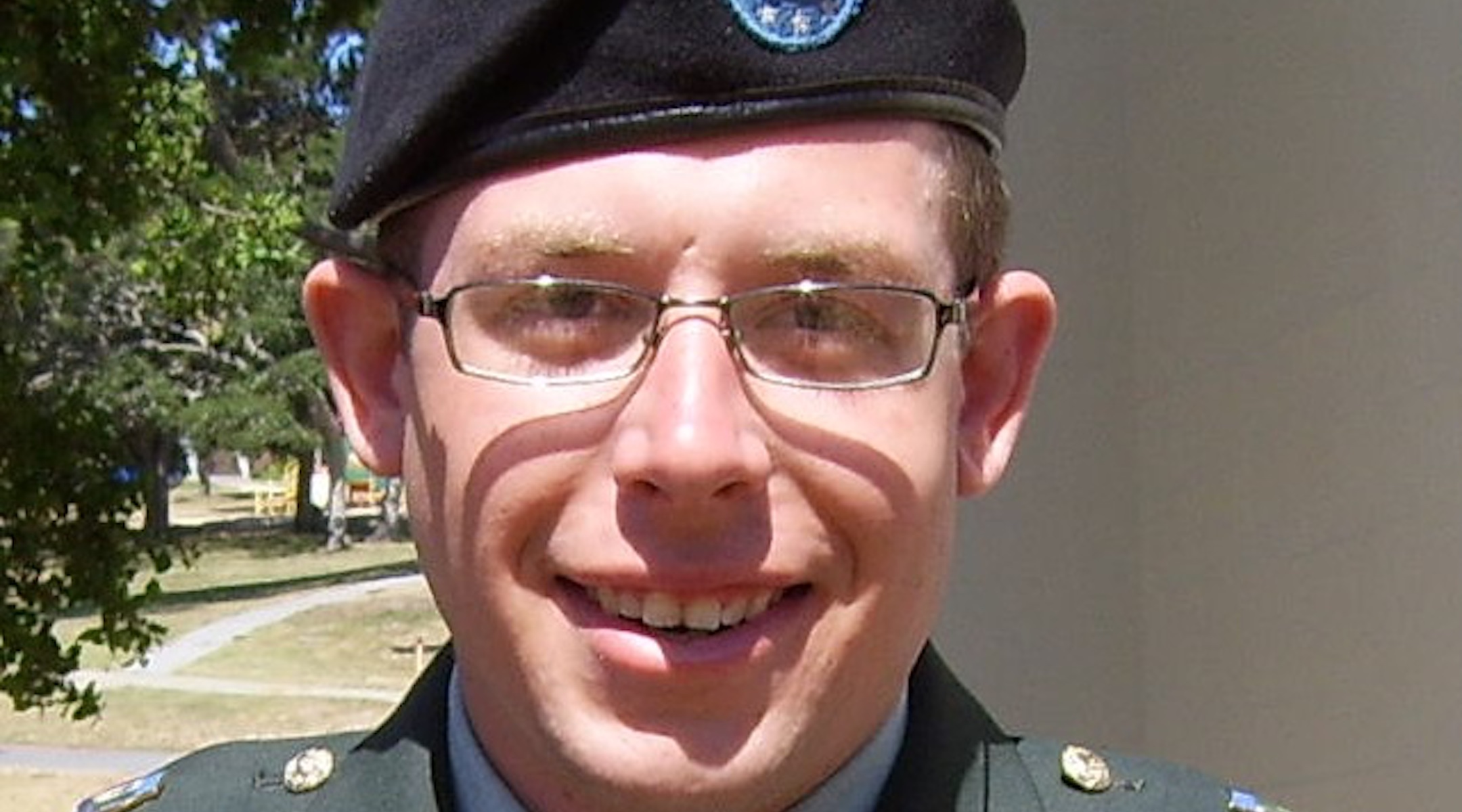 Daniel Somers committed suicide after suffering from mental and physical health problems as a result of his Army service in Iraq. (Courtesy of Howard and Jean Somers) Since Daniel’s suicide in 2013, Howard and Jean, who live in the San Diego area, have become tireless advocates for reform in what they see as a system that failed their son. Among other things, Daniel experienced delays in getting treatment from the VA and was denied individual therapy even though he said he feared disclosing classified information in a group setting. His parents say they have been able “to perpetuate minor changes.” Many would describe them as far more than that: The couple, who were not involved in politics or activism prior to their son’s death, have testified before Congress and have had hundreds of meetings with lawmakers and government officials sharing their son’s story and advocating for change. In 2016, a bill named after Daniel — introduced in the House by Sinema, then a congresswoman — was signed into law, ensuring treatment for veterans with access to classified information. If things go according to plan, soon it won’t be the only successful bill named after Daniel. The Daniel Somers Network of Support Act passed in both the Senate and the House in the past four weeks as part of the 2020 National Defense Authorization Act. Both chambers now must reconcile the differences between the two versions before the final text is sent to the president to sign into law. It would require the Department of Defense to provide updates about a service member’s mission and future benefits to the service members’ loved ones. Howard and Jean Somers say that having access to information about the routines and stresses of military service, as well as the benefits to which warriors are entitled, is crucial. “We feel that if we had a better idea of what Daniel had been going through, we might have been able to help him a heck of a lot more than we were able to — because we weren’t able to help him at all,” Howard told JTA. “We had no idea what he had experienced, we had no idea how to approach him.” The couple still has plenty of work ahead of them. They have drafted a 23-point agenda of various gaps in the system that they want to fix. “We’ve learned to temper our anger and work within our system,” Howard said. “But I think that the injustice of it all and the way Daniel was treated by the system — this was a young man who had the world’s biggest heart and was the most generous person you’d ever want to meet — and the way he ran into these roadblocks was just incomprehensible for us.” The Somerses, who attend Temple Emanu-El, a Reform synagogue in San Diego, say that Jewish values around social justice influences everything they do. Howard grew up in a Jewish family, while Jean became a Jew by choice after marriage. She said one thing that really spoke to her was the concept of tikkun olam, the Hebrew phrase for the Jewish precept to repair the world. “The whole Jewish value system is what drew me to Judaism,” Jean said. “It’s how we live life.” Another thing that guides them is their late son. “We just always feel his presence,” she said. “He’s been a guiding force in everything that we’ve done, it’s another way to keep him close.” To “keep him alive,” added Howard. ESPAÑA MI NATURA |
OBSERVACIÓN QUI POTEST CAPERE CAPIAT Posted: 29 Jul 2019 02:37 AM PDT SI algún hijo de puta llama a Amonio Parra nazi, psicopata, loco, borracho (bueno de esas dos cosas algo llevo) le contestaré de muy malos modos. Yo soy un hijo de la piedra un pobre judío de la tribu perdida que encuentra refugio en la palabra y en la oración y todos los días soy crucificado en la cruz de Cristo por mi mujer, por mis parientes, por mis vecinos o por los quie dicen ser mis amigos. Yo no sé si mis antepasados fueron perseguidos por Hitler lo que sí puedo asegurar que nos ha zurrado sobre todo a mí bien la badana los sátrapas de este régimen corrupto llamado democratico juancarlista, en sus debacles, devaneos, corrupciones, asesinatos y maldades. Estuvimos bajo las mira de los nuevos inquisidores vaticanos que son de la piel del diablo, pero Dios nos salva. Israel bendito está de muestra parte. No somos una caña movida por el viento. Tenemos un peso especifico muy oneroso para los mangantes y tiranos ESPAÑA MI NATURA |
Posted: 29 Jul 2019 02:26 AM PDT Rabbis are making it harder for Israeli immigrants to prove they’re Jewish, study saysBY MARCY OSTER  Israel’s Chief Sephardic Rabbi Yitzhak Yosef, left, and Chief Ashkenazi Rabbi David Lau at a Chief Rabbinate ceremony in Jerusalem, Sept. 4, 2014. (Yonatan Sindel/Flash90) ADVERTISEMENT JERUSALEM (JTA) — Mikhail (not his real name), who immigrated to Israel with his parents during a wave of migration from the countries of the former Soviet Union, recently was engaged. He went to the Chief Rabbinate to register his upcoming wedding — couples must prove their Jewish identity — and like many “Russian” Israelis was asked to return with documents proving his Jewishness. Mikhail was asked to present seven different documents that included things like his grandparent’s Jewish marriage contract and his mother’s birth certificate. According to Itim, an Israeli organization that shared Mikhail’s story, the Chief Rabbinate was unconvinced by one of the documents and thought it raised the possibility that Mikhail was not Jewish. It decided to place him on the list of non-Jewish citizens who cannot marry a Jewish Israeli through the Chief Rabbinate — in Israel, the only way a Jew may marry. Adding insult to injury, the Chief Rabbinate put all of Mikhail’s siblings on what some critics are calling the “blacklist” and threatened to retroactively annul his parents’ marriage. Mikhail’s story is not unusual, and is becoming even more common, according to Itim’s director, Rabbi Seth Farber. And in an increasing number of cases, the Chief Rabbinate has asked people, many of them immigrants or children of immigrants from the former Soviet Union, to undergo DNA testing to prove their Jewish roots. “A new culture has developed within the Rabbinate that suspects everyone and relies on documents and science and technology, and not on religious norms,” Farber, whose organization helps Israelis navigate the nation’s Orthodox-run religious monopoly, told the Jewish Telegraphic Agency. A study recently released by the Israel Democracy Institute and Itim warns that over the next two decades, hundreds of thousands of Israeli citizens from the former Soviet Union or of Ethiopian descent may need to undergo a process to validate their Judaism. The study showed an increase in the proportion of cases that ended with a ruling that the applicant was not Jewish, from 2.9 percent in 2011 to 6.1 percent in 2016 to 6.7 percent in 2017. Although those numbers may appear small, Itim and other advocates say the process is humiliating, demoralizing, unnecessary and undertaken with no clear or uniform standard for validating a person’s Jewishness . In Israel, the Chief Rabbinate controls marriage and divorce. In order to marry through the Chief Rabbinate, spouses must prove they are Jewish. It’s not difficult for Israelis who have been in the country for generations: The marriage certificates of their parents and grandparents issued by the Chief Rabbinate are on file. Immigrants to the country must prove to a rabbinical court that they are Jewish. Defenders of the Chief Rabbinate’s policies say tens of thousands of emigres from the former Soviet Union came under Israel’s Law of Return and needed to have only one Jewish grandparent to qualify for citizenship. Jewish law, or halacha, they say, only recognizes as Jewish those whose mothers are Jews, or who themselves converted to Judaism under approved authorities. The demand for a paper trail assures those claiming to be Jewish really are, they say. According to the study, however, “This move represented a major departure from the halakhic tradition, which holds that individuals’ declaration that they are Jews is sufficient for them to be recognized as such.” It also deviated from a halachic principle that emphasizes the “presumption of Jewishness” for members of an established community or from a pool of Jews with similar backgrounds. Shuki Friedman, one of the study’s authors and the director of the Israel Democracy Institute’s Center for Religion, Nation and State, said the rabbinical courts can be a very unpleasant experience for the person whose Judaism is being investigated. The Chief Rabbinate appoints a “Jewish investigator,” who assesses the the applicant’s documents and is familiar with the history of the Jewish communities in the areas from which the immigrants originated. Some rabbis are now asking individuals whose Judaism is in question to take DNA tests to prove they are Jewish. This is not official policy for the Chief Rabbinate, Friedman stresses — but it might just be a matter of time. Farber said that in the past two years his organization has represented at least 14 people who were asked to take DNA tests, which he calls a “scientifically flawed and Jewishly misguided approach to proving Jewish identity.” Earlier this month the Supreme Rabbinical Court, Israel’s highest religious court, struck down lower rabbinical courts’ requests for DNA tests for two families. If the requests for such genetic tests continues to increase, Farber said he will ask the civil Supreme Court to rule that the Chief Rabbinate has no authority to order such tests. The Chief Rabbinate, he said, argues that it does not force anyone to undergo a DNA test if he or she does not want to. But in practice, declining leaves prospective spouses in limbo, for they cannot marry without the Chief Rabbinate’s go-ahead. The DNA test issue was taken up by Avigdor Liberman, head of the Yisrael Beiteinu party, which represents many immigrants from the states of the former Soviet Union. A spokesman for the Chief Rabbinate did not respond to JTA’s request for an interview. Farber said that a cloud of suspicion about Jewishness now surrounds anyone who comes from overseas, including Jews from the United States. “Instead of a country who welcomes immigrants, we suspect them,” he said. A 2010 statement of principles on Jewishness was supposed to standardize what the Chief Rabbinate expected in terms of the rules and regulations for determining Jewishness. But it has not been able to standardize things enough. The IDI-Itim study includes recommendations for the Chief Rabbinate to make the process less cumbersome and more respectful for those who must undergo a verification process. Among the recommendations: Codify a halachic policy that “recognizes the presumption of Jewishness and rules of evidence that were the norm for the Jewish people over the generations”; train rabbinical court judges so that they acquire expertise on the issue; and reduce the number of investigations of Jewishness and make such investigations less threatening and less intrusive. Friedman said there is potential to change the process to make it more “friendly,” but it will not change the procedure dramatically. For real change to occur, the Chief Rabbinate would have to adopt a different halachic attitude toward the issue. And Friedman is not very optimistic about that. Farber believes it is going to take a Knesset law delineating the reach of the Chief Rabbinate to improve the situation. “It needs a government that is willing to understand that the Zionist enterprise needs to be embracing,” he said, and to tell the Chief Rabbinate that it is overstepping its legal and religious authority. ESPAÑA MI NATURA |
los judios saben reirse de si mismos y del holocausto. qué seria de nosotros sin hitler y sin israel Posted: 29 Jul 2019 02:16 AM PDT Jewish comic Andy Kindler thinks Trump is good for comedy — ‘if we don’t die!’BY STEVE NORTH 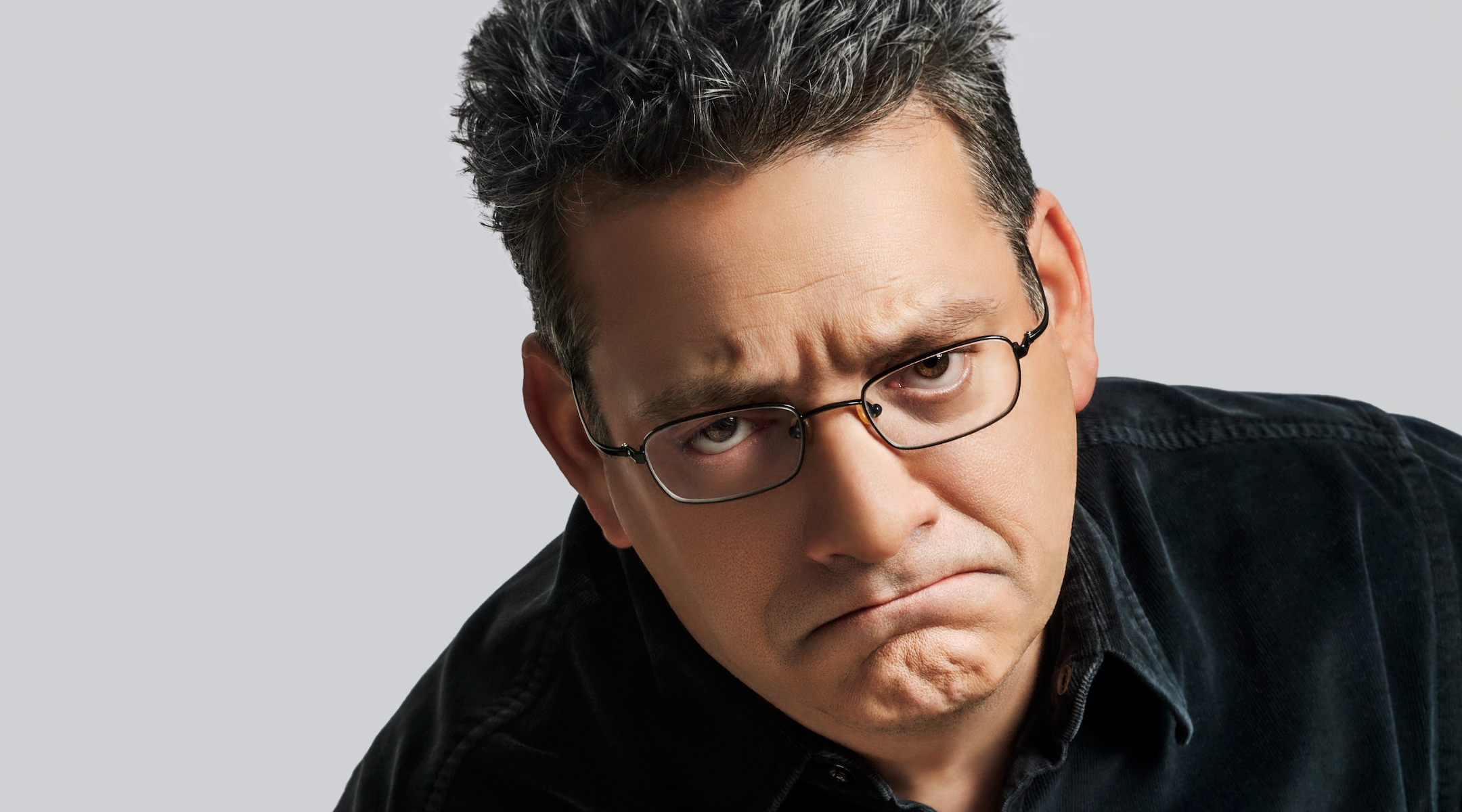 Andy Kindler has frequently referenced the Holocaust in his comedy. (Courtesy of Just for Laughs) ADVERTISEMENT MONTREAL (JTA) — Andy Kindler is back to tell us that while the state of the union may not be great, the state of comedy is strong. Known for his countless appearances on the “Late Show with David Letterman” and his recurring role as sportswriter Andy on “Everybody Loves Raymond,” Kindler has also established a niche as an ombudsman of sorts for the business of comedy. Since 1996, he’s given a “State of the Industry” speech, which he describes as “part rant, part roast,” at the annual Just for Laughsfestival, which is in the midst of its final and busiest week in Montreal. Kindler, standing before fellow comics, journalists and Hollywood insiders, unabashedly bashes comedians he feels have lost the funny. In his often controversial opinions, that includes everyone from Jay Leno to Ricky Gervais, with whom he’s had a years-long feud. And he looks at developments beyond the comedians, which in recent years include the shadow that President Donald Trump has cast on the comedy business. Kindler believes Trump’s influence is surprisingly positive. “When he first got elected, everyone was depressed. But now that he’s so overtly a racist, it’s actually great for comedy,” Kindler said. “It woke up [Stephen] Colbert, ‘The Daily Show’ and so many standups. I think it’s necessary [to do Trump-related jokes]. Comedy in the Reagan era, for example, pales in comparison because there is such actual danger now.” “I think it’s exciting,” he added, “if we don’t die!” It’s a mark of his successful career that Kindler can risk verbally biting the hand that feeds him, launching brutal attacks not only on various high-profile individuals but on the entertainment world in general. The 62-year-old comic is a native of Queens, New York. “My father was a cobbler,” he tweeted recently. “A peach cobbler.” Actually his father was a plumbing and heating contractor. His mom was a homemaker who became an expert in antiques. Kindler’s paternal grandparents and maternal great-grandparents were all Russian-Polish immigrants, and he grew up attending Sunday school at a Reform temple. “I didn’t like the classes,” he recalled, “but I was very excited about my bar mitzvah because it was a performance, even though I didn’t know I was going to be a comic then.” Kindler’s mother, who grew up in a New York City suburb with few Jews, became somewhat alienated from her heritage. “Hanukkah was not good in my house,” he lamented, “but Sukkot was my favorite holiday because in temple they gave us challah with honey and apples.” 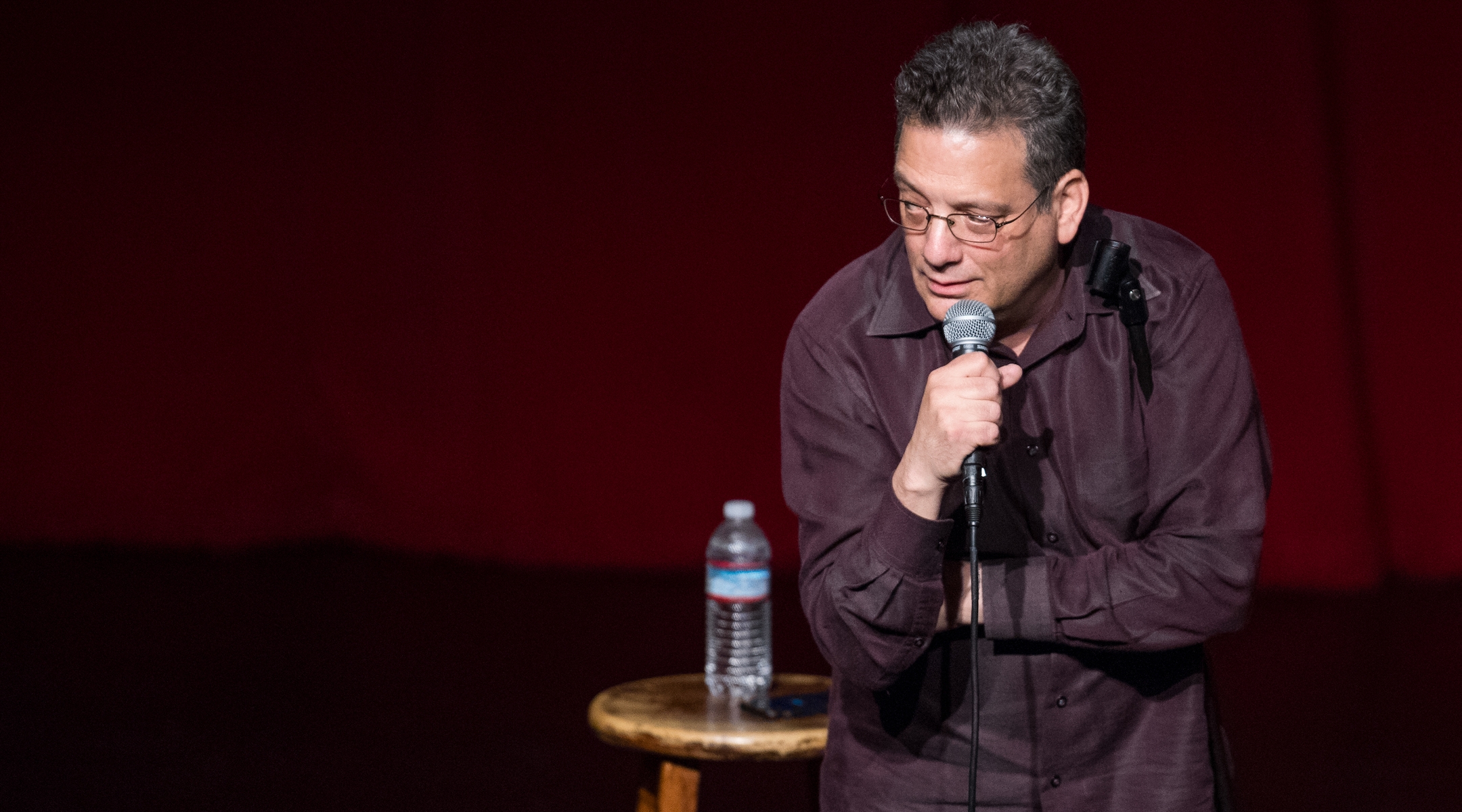 Kindler performs in Los Angeles, Sept. 21, 2017. (Emma McIntyre/Getty Images) The whole family, Kindler recalled fondly, was funny, and he not only enjoyed growing up in Queens (“where everyone is disgusted with everything!”), but it was during those years he would sit down to watch standups on TV such as Alan King and Jackie Mason. They became his comedic role models. Kindler has often included Holocaust references in his routines, but he takes pains not to trivialize the tragedy. “I did an HBO special once in which I spoke about my fears of being rounded up. I said, ‘I won’t go on a train. It’s going to Baltimore? Right; more like Baltimore-Stuttgart!’ A Jewish comedy writer told me he was very upset with me, so I had to examine why I was doing such jokes,” he said. “And the reason was my own fear of the Holocaust happening again. So I feel it’s justified to examine it.” These days, Kindler is more scared than ever, focusing as much on the state of the country as the state of the industry. “I understand that nothing compares to the Holocaust,” he said somberly, “but I think it’s important to compare Trump to Hitler in order to wake people up. Trump is like Hitler, except he’s doing it with Muslims and Mexicans. I’m not 100 percent sure all the time, but I think my stuff is bringing those memories back for a pointed reason.” Along with his State of the Industry speech on Friday, Kindler will host “The Alternative Show” on four nights of Just For Laughs, described by the festival as the comedian “taking you off the beaten path of mainstream comedy and into the chaotic wilderness.” Kindler has emceed that event since the 1990s, when “alternative” comics like Sarah Silverman, Marc Maron and David Cross were imagining possibilities for standup beyond the standard setup, punchline and audience work of the mainstream comedy clubs. He says “the name doesn’t make much sense anymore because it’s all alternative now. I think comedy is in a better place than it’s ever been because it’s become so diverse.” Kindler, who’s been married since 2002 to photographer Susan Maljan, shows no signs of slowing down. He’s a regular voice on the animated sitcom “Bob’s Burgers” and Comedy Central’s “Tosh.O,” along with doing standup throughout the country. He doesn’t, however, deny that aging has an effect. Holding on to a podium during a recent appearance, Kindler paused mid-joke and said “Why am I leaning over like an old Jew?” A brief pause, then the answer: “Because I am an old Jew!” ESPAÑA MI NATURA |
Posted: 29 Jul 2019 02:03 AM PDT How poetry literally saved the life of a famed Yiddish writer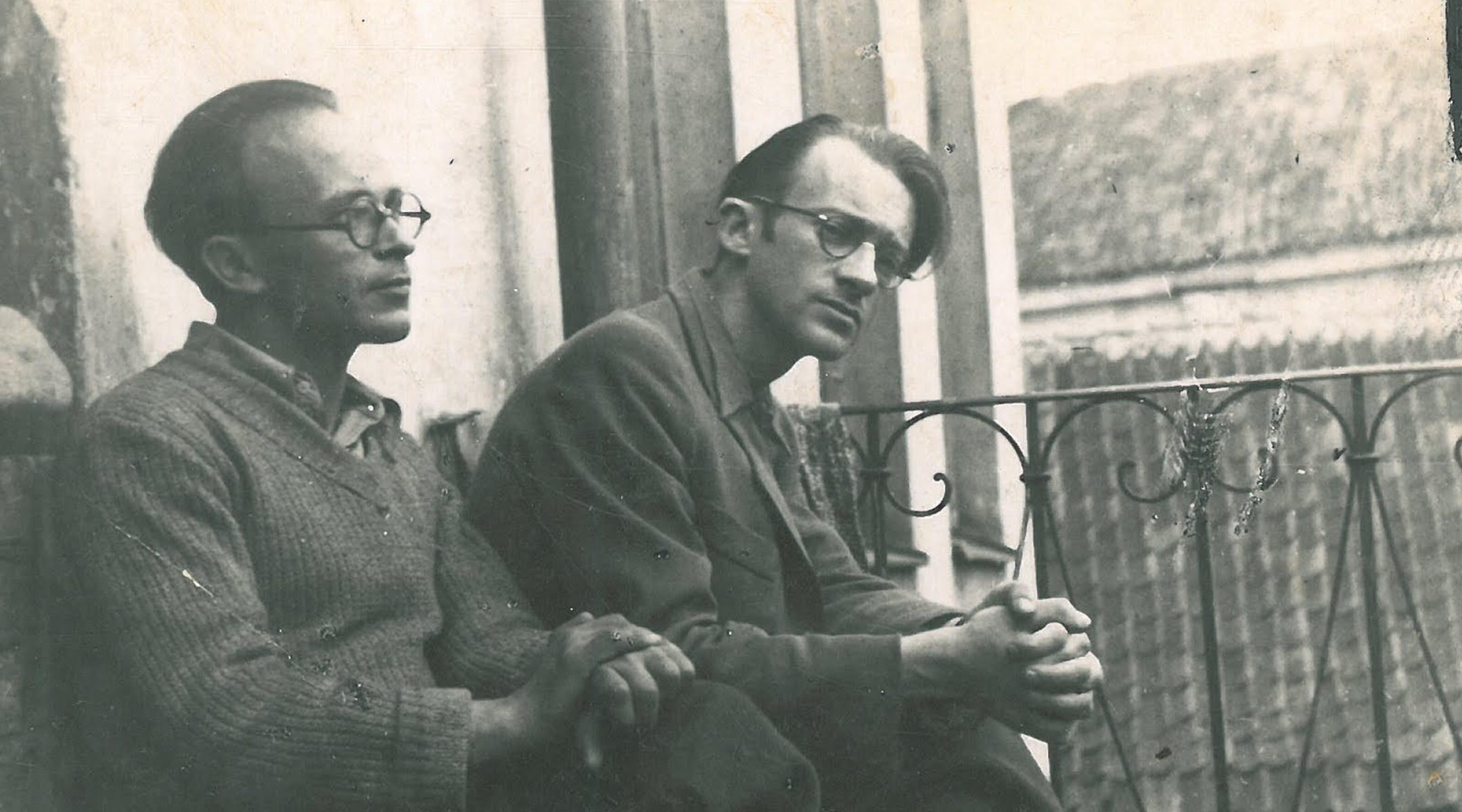 Abraham Sutzkever, right, before World War II in Vilnius, Lithuania. (Courtesy photo) ADVERTISEMENT MINSK, Belarus (JTA) — When Yiddish poet Avraham Sutzkever said that poetry saved his life, he meant it more literally than many of his listeners realized. In 1944, Sutzkever and his wife, Freydke, needed to walk through a minefield to reach the plane that would take them to freedom. And to do so, they stepped to the rhythm of poetic meter —short, short, long, and sometimes long, short, long. His poems about the Holocaust in Vilnius and his role in saving priceless Jewish texts from the Nazis led the Soviet authorities – likely Joseph Stalin himself — to send not one but two rescue missions into Nazi-occupied Lithuania to fly the Sutzkevers to Moscow. Two years later he was tasked with testifying on behalf of the Soviet Union at the Nuremberg trials in Germany aiming to bring Nazi criminals to justice. Nearly a decade after his death in 2010 in Israel, Sutzkever’s astonishing life story is being told on film for the first time in an award-winning documentary co-produced by his granddaughter, Hadas Calderon-Sutzkever, with funding from the Claims Conference. “You could take Sutzkever’s life from beginning to end and it would be the most astonishing guide to the most dramatic moments in Jewish history of the 20th century,” Yiddish scholar Ruth Wisse says in the film, which is titled “Black Honey: The Life and Poetry of Avraham Sutzkever.” It won the Yad Vashem award for movies about the Holocaust at last year’s Jerusalem Film Festival.  Hadas Kalderon-Sutzkever signs a poster for a new film about her grandfather Abraham Sutzkever in Tel Aviv, 2018. (Courtesy of Kalderon-Sutzkever) Sutzkever’s accounts from the Vilna Ghetto in Lithuania, which he wrote and dated in descriptive poems, are among the most unusual and affecting testimonies from that hell on Earth. Only 1 percent of the approximately 40,000 prisoners survived. One of the poems, “The Teacher Mira,” heartbreakingly chronicles how teacher Mira Bernsteincared for her dwindling flock of charges in the ghetto — orphans whose parents had been murdered. Sutzkever named one of his two daughters Mira for that teacher. Another poem documents how partisans made weapons from the large lead plates of the Jewish Rom Printing House in Vilnius because “Jewish bravery that lies in words must echo in the world in bullets,” as Sutzkever wrote. And still another verse recounts how Bruno Kittel, the Nazi SS officer who oversaw the liquidation of the Vilna Ghetto, executed a man while holding a pistol in one hand and playing a piano with the other. Becoming a ghetto diarist — he began dating his poems and composing a new one nearly every day during his incarceration in 1941 – did not come naturally to Sutzkever. Before the war, his focus on nature’s beauty, as he recalled it from his childhood in Siberia, made him an outsider to Vilnius’ Yiddish literary scene, with its socialist and political themes. In the ghetto, Sutzkever’s poems turned macabre, particular and personal. The most chilling example is his description of holding the lifeless body of his and Freydke’s first child. Born at the ghetto hospital, the newborn was poisoned immediately after birth at the orders of the Nazis, who forbade births there. “I wanted to swallow you whole my child / when I felt your little body cooling between my fingers / like a warm cup of tea,” he wrote. Sutzkever’s mother also was murdered near the ghetto, and he wrote about that, too. His father had died in Siberia when he was 7, forcing the family to move to Vilnius. In what seems like a trauma-induced delusion, Sutzkever said he believed that producing excellent poetry would make him indestructible to the Nazis. This could explain his extraordinary willingness to risk his own life. As a writer in the ghetto, he was tasked in 1943 with sorting and cataloging select Jewish writings that the Nazis wanted to preserve for their archives about their annihilation of European Jewry. But Sutzkever and a handful of other members of the “paper brigade” risked their lives to smuggle and stash hundreds of priceless writings that are in Israel today thanks to their actions. In 1943, Sutzkever and his wife escaped the ghetto. During the escape, a German sentry spotted Sutzkever after curfew, the poet recalled. Instead of running or begging for his life, he walked up to the German and told him, “I’m glad I met you. Do you know where I can go, where there are no Germans?” The sentry allowed him to escape, and a non-Jewish woman hid him in her potato cellar until he joined the partisans, Sutzkever said. From the partisans, his poems and some rescued documents reached Moscow, providing early and chilling evidence of what was happening to the Jews of Lithuania. The texts reached key individuals in Moscow’s wartime literary scene, including the Jewish writer Ilya Ehrenburg, who was one of the few intellectuals that Stalin trusted. In 1944, a Red Army plane was sent to retrieve the Sutzkevers from near the partisan camp, where Freydke acted as a nurse. But it was downed by German anti-aircraft fire. A second plane was sent two weeks later. The Sutzkevers had to traverse a minefield to reach it. “Part of the time, I walked in anapests, some of the time I walked in amphibrachs,” Sutzkever told his friend and translator Dory Manor, referring to lines of poetic meter. With Freydke walking in his footprints, “I immersed myself within a rhythm of melody and to that rhythm we walked a kilometer through a mine field and came out on the other side,” Sutzkever later wrote. 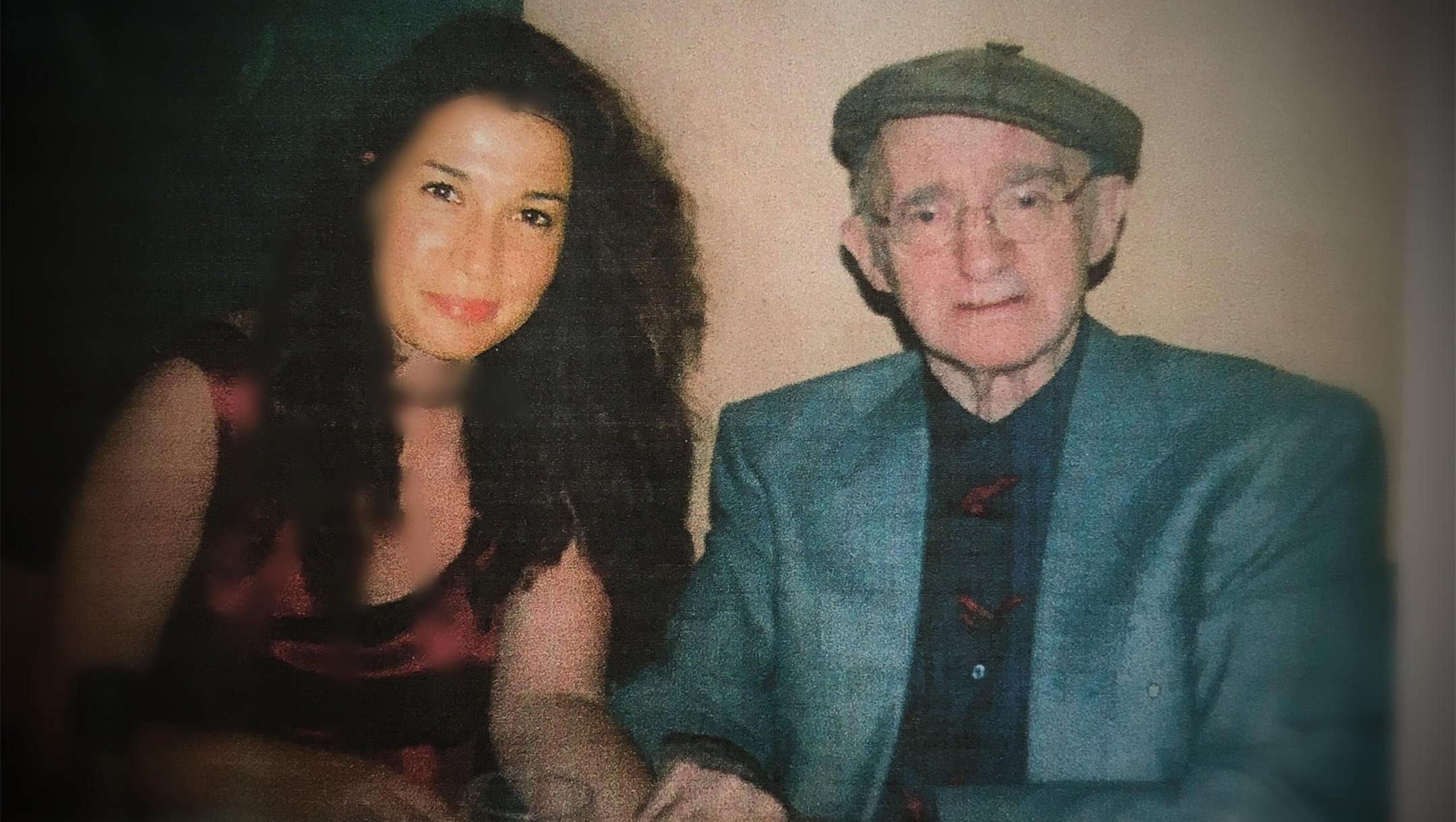 Sutzkever with his granddaughter Hadas in Tel Aviv, 2008. (Courtesy of Hadas Kalderon-Sutzkever) He was carrying a suitcase made of metal salvaged from the wings of the first rescue airplane. It contained historical documents, including a program of a concert of the Vilna Ghetto Philharmonic orchestra. (Nearly all its players had been murdered already by the time Sutzkever brought the brochure to Moscow.) Two years after his extraction, which was featured on the front page of the Communist Party daily Pravda, Sutzkever testified at the Nuremberg trials in Germany. He wanted to deliver his testimony in Yiddish, but Soviet authorities forced him to do it in Russian. In 1947, the Soviets allowed Sutzkever to emigrate. New York, where he would have expected a warm embrace from that city’s Yiddish literary scene, would have been the obvious choice. Instead, the Sutzkevers chose war-torn, prestate Israel, where Yiddish was marginalized by a government that reviled it as an ugly consequence of living in the Diaspora. Nevertheless, Sutzkever established a highly regarded Yiddish-language weekly in Israel, Di Goldene Keyt (“The Golden Chain”), which remained active for 46 years until its closure in 1995. In Israel, Sutzkever was recognized early on as one of the Yiddish language’s great poets — Dan Miron, the Yiddish scholar and literary critic, has crowned him “the king of Yiddish prose in the second half of the 20th century.” But at his death at the age of 96, Sutzkever remained largely unknown to consumers of mainstream literature in Israel despite having won the country’s highest literary distinction, the Israel Prize, in 1985. Sutzkever’s refusal to have a documentary made about him during his lifetime was typical of his humility, which to some degree ensured his relative anonymity, said Chaim Chesler, co-founder of the Limmud FSU cultural organization. In May, Limmud FSU screened “Black Honey” in Minsk, Belarus, the first time it was shown in the former Soviet Union. (The film’s next U.S. screening is scheduled for Sept. 15 at the Sabes JCC Camp Olami in Minneapolis.) 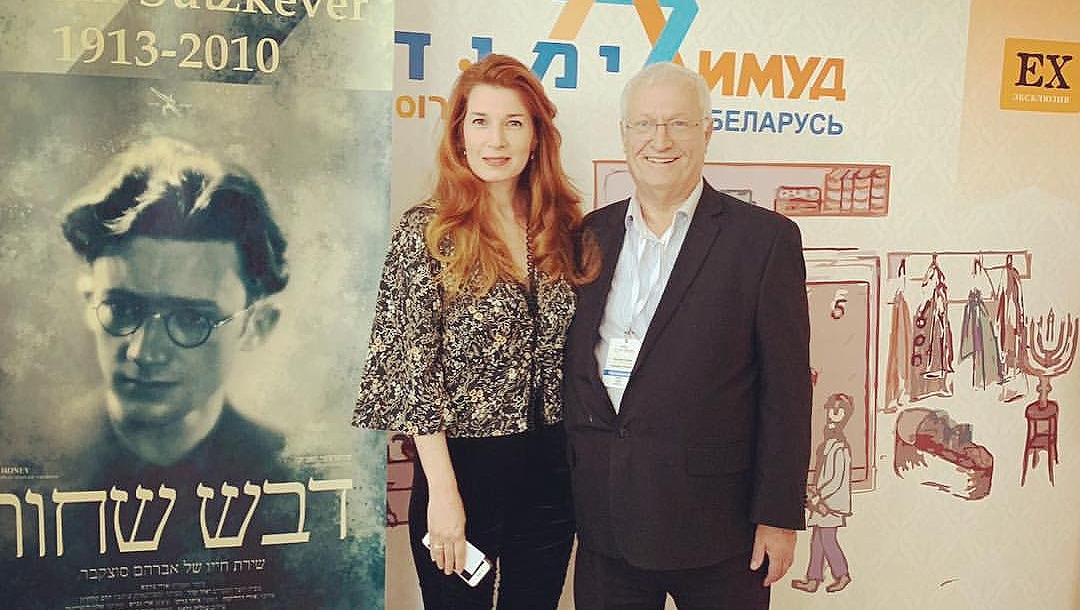 Kalderon-Sutzkever and Limmud FSU founder Chaim Chesler attend the Belarus premiere of a film about Abraham Sutzkever in Minsk, May 3, 2019. (Courtesy of Limmud FSU) Sutzkever didn’t lose his voice in his new country, and he composed one of the longest and most complex poems ever written about Israel’s War of Independence, “Spiritual Earth.” All of a sudden, “he was able to renew himself and Yiddish poetry with unprecedented material,” said Benny Mer, a writer and Yiddish translator. ESPAÑA MI NATURA |
SUICIDIO ASISTIDO EN ISRAEL. MISTERIOSO Y ENTRAÑABLE NACIÓN A LA CUAL AMAMOS Y NO COMPRENDEMOS Posted: 29 Jul 2019 02:00 AM PDT How a religious Jewish farmer became a promoter of assisted suicide in Israel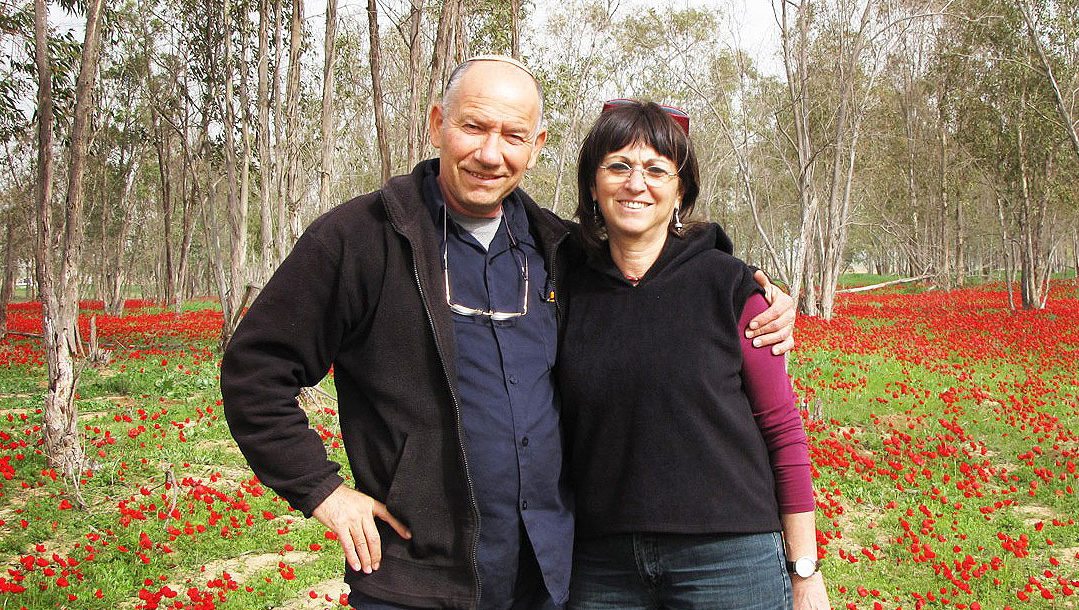 Yoskeh and Nurit Marmurstein enjoy winter blossoms in Alumum, Israel, in 2012. Nurit, right, chose to go to Switzerland to have an assisted suicide. (Courtesy of Yoskeh Marmurstein) ADVERTISEMENT ZURICH (JTA) — When her cup of barbiturate arrived, Nurit Marmurstein was so eager to die that she ignored instructions to drink it slowly and gulped down the whole dose. To her husband, Yoskeh, this eagerness illustrated both his late wife’s suffering from the terminal disease that tortured her and her determination to end the pain in 2014, when the Israeli couple traveled to Switzerland because it’s one of a handful of countries where assisted suicide is legal. Hundreds of people make use of the services of assisted suicide agencies like Dignitas and Exit each year in Switzerland, where helping people end their lives “for non-selfish reasons,” as the Swiss law specifies, has been allowed since 1942. Dozens of Israelis like Nurit Marmurstein, a mother of four whose body was ravaged by ALS, or Lou Gehrig’s disease, have made the same desperate move. But the decision can be particularly difficult for Jews. Suicide is such a grave violation of halacha, Jewish religious law, that those who kill themselves are often denied burial in Jewish cemeteries. It was certainly a difficult decision for the Marmursteins, who lived and raised their children in the Orthodox religious kibbutz of Alumim, near Ashdod, on Israel’s western coast. “It was a concern to Nurit and we sought rabbinical advice,” Yoskeh, 64, told the Jewish Telegraphic Agency. He said the Orthodox rabbi they contacted “deliberated for a month and finally told us it was not allowed but, in her case, not strictly forbidden because of her intense suffering.” Ultimately, though, “Nurit would’ve ended her life regardless of what the rabbi said because she had had enough pain and suffering,” said Yoskeh, a farmer. Nurit’s body was buried at a Jewish cemetery with the help of a lenient rabbinical interpretation by another rabbi, which is often applied to suicides: It stated that she regretted her decision as soon as she drank the lethal dose of barbiturate. Yoskeh welcomed the permission but insists its reasoning is inaccurate. “She couldn’t wait to drink it. She was adamant about dying,” said Yoskeh, who has become an activist for promoting assisted suicide in Israel, where he speaks frequently in the media and in lectures about his family’s story. Nurit, whose friends said she had an unquenchable lust for life when she was healthy, was diagnosed with ALS approximately a year and a half before her assisted suicide — aided with pentobarbital — at the Dignitas facility near Zurich, a blue-paneled cottage on a leafy suburban street.  The assisted suicide clinic Dignitas in Pfaeffikon, near Zurich. (Sebastian Derungs/AFP/Getty Images) What Nurit, who was 59 when she died, first attributed to “age-induced clumsiness” soon turned out to be a violent form of the degenerative sickness, Yoskeh said. Slurring, shaking and unable to effectively use her limbs, she offered an apology as her goodbye note, which she dictated to her husband. “Do not judge a person until you are in their place. I’m sorry, everyone. This is my decision, and mine only. Also the execution. I can no longer go on. Forgive me,” she said, relaying apologies to individual relatives before concluding with the words “Forgive me, friends who supported me so. With infinite love, Nurit.” Other Israelis who had resorted to Dignitas’ services were unapologetic. “You feel your body slowly losing itself,” Dan Dori, another ALS patent who committed suicide with Dignitas in January, wrote ahead of the trip. “I’m not paralyzed yet, but that’s precisely why I’m going to Switzerland: To avoid ending up like that.” In his goodbye note, he thanked his friends and family, assuring them that he had “won over the disease” by ending his life when he did. 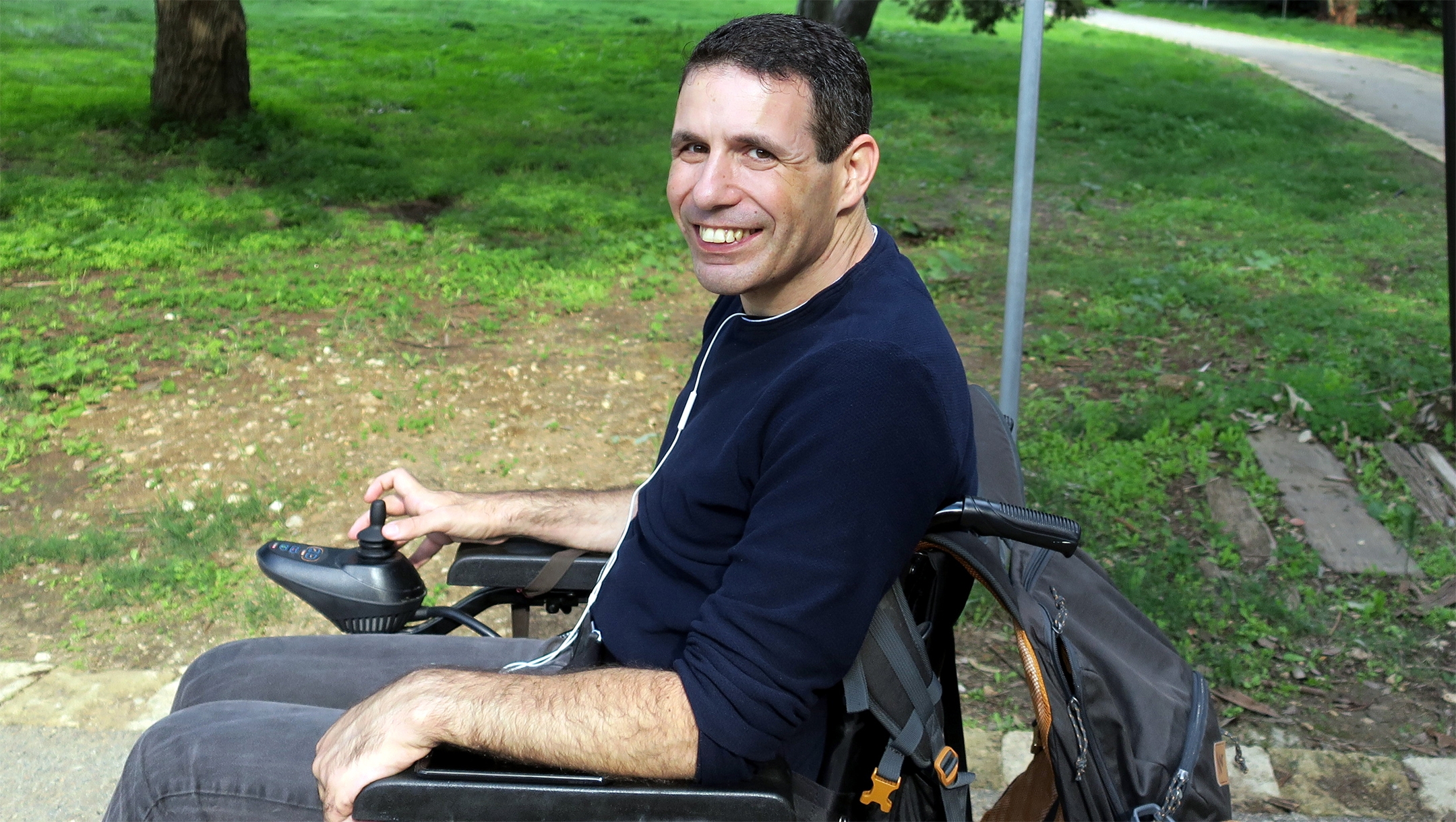 Dan Dori, seen in Israel in 2018, chose assisted suicide at 45 before he became paralyzed by ALS. (Courtesy of the Dori family) Dori, 45 when he died, was a secular high-tech professional whose family largely accepted his choice. Several family members and friends pleaded with Nurit to give up on her plan to commit suicide, citing religious taboos. “She felt their pain, but there was no stopping her. It was no use,” her husband said. Nurit’s guilt may have been unavoidable. But the pain and suffering she endured during the trip to Switzerland, as well as dying outside the only country she loved, “were an unnecessary nightmare,” Yoskeh said of his wife of 39 years. “I hope one day Israel will allow assisted dying so others don’t have to endure what we had.” It’s an unlikely prospect in a country where religious sensitivities preclude even public transportation on Shabbat, the Jewish day of rest. Even in Switzerland, which despite its liberal legislation has a relatively conservative society and strong church, the practice of assisted suicide is controversial and has been challenged numerous times in court, albeit unsuccessfully. Among some Swiss Jews, resistance to assisted suicide is so fierce that they object to helping people like Yoskeh transport the body of a loved one for burial in Israel. Rafi Mussbacher, a Swiss-Jewish import-export professional who arranges such shipments, told JTA that he was asked by Chaim Moishe Levy, a senior Zurich-based rabbi, to refrain from helping return Nurit Marmurstein’s body to Israel specifically because she comes from a religious Orthodox family. Mussbacher, who ships one or two bodies of Dignitas patients each year to Israel, ignored Levy’s instruction. “Each person who kills himself is one person too many,” Mussbacher told JTA. “I refuse to have any contact with families before the act or be a part of any aspect of the planning. But once it’s done, I am bound by religious laws to help bring a Jewish body for burial. It’s a mitzvah.” Levy denied that he had intervened with the burial arrangements of Nurit Marmurstein, calling the claim “misinformation.” “I have nothing to do with the issue,” he told JTA. Both Dignitas and Mussbacher’s agency, Jumbo Air Cargo, charge several thousand dollars for transporting a body. But with Dignitas, the procedure takes a week. Mussbacher’s agency offers next-day delivery, which is critical for Jews interested in observing the religious commandment that burial happen as soon as possible after death. Amid debates in 2010 about the Swiss law permitting assisted suicide, the Swiss Federation of Jewish Communities issued a policy statement explaining why it will not participate in drafting provisions for the practice, even though the government consulted the federation to provide its input. Whereas the federation welcomes the government’s opening the subject to debate, the statement emphasized that the Jewish group “cannot and will not participate in the drafting of a legal document” about the practice. Rabbi Mendel Rosenfeld, a Chabad emissary to Zurich, is so opposed to assisted suicide that he rejects the term. “You mean assisted murder,” he told JTA. “It’s profoundly immoral.” Jakob Ledereich, an Orthodox Swiss rabbi, also opposes categorically the involvement of third parties in suicide. But, he added, “I can’t blame the people who commit suicide themselves. I know it’s forbidden,” he said, “but when I look at it rationally, I can’t fault the decision of a terminal patient in tremendous pain to end the torture early.” This article is sponsored by UJA-Federation of NY, to raise awareness and facilitate conversations about end of life care in a Jewish context. The story was produced independently and at the sole discretion of JTA’s editorial team. ESPAÑA MI NATURA |
Posted: 28 Jul 2019 05:05 AM PDT MONASTERIO DE SANTA MARÍA DE CARDABA APUD SACRAMENIA El sol de junio dora la mies Hoy es Santa Ana capitana La mitad del verano Y yo peregrino a este pago A la sombra de las olmas seculares Y Las piedras sagradas Que edificara Alfonso VII El primer convento del Cister La paz monástica Dulce y suave como el vino de Valtiendas Oigo el himno gregoriano Se siente acá la presencia beatifica De San Bernardo Bajado del cielo Con escolta de ángeles Y un ejército de monjes blancos Sombras anónimas Dulce encanto Como el fragor De este río Que cruza el valle Cantando loas A la Virgen María Madre mía noche y día yo te ensalzo entre sonrisas de oro y la brisa del verano Estos son derroteros de mi purificación 28/07/2019       ESPAÑA MI NATURA |
| You are subscribed to email updates from antonioparragalindo.blogspot.com. To stop receiving these emails, you may unsubscribe now. | Email delivery powered by Google |
| Google, 1600 Amphitheatre Parkway, Mountain View, CA 94043, United States | |


No hay comentarios:
Publicar un comentario