

- ultima entrevista con el pariarca Alexis II poco a... 5 dic. 2015
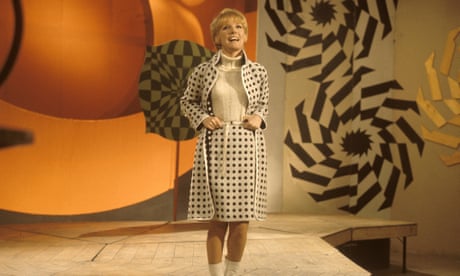
- SHE WAS BEAUTIFUL AS MY SUZANNE. DONT SLEEP ON TEH SUBWAY DARLING DONT STAY UNDER THE POORUNG RAIN. I LOVED PETULA CLARK. UNA ENTREVISTA EN EL MANCHESTER GUARDIAN
Posted: 31 Jul 2019 11:02 AM PDT ESPAÑA MI NATURA |
ultima entrevista con el pariarca Alexis II poco a... 5 dic. 2015 Posted: 31 Jul 2019 11:00 AM PDT ESPAÑA MI NATURA |
Posted: 31 Jul 2019 07:33 AM PDT SEGOVIA SEVODNIA Bimenbriga old town Towers and belfries Trailing chains Of crimson sins The face of Laura Like a ghost on me Hornchurch bells peeling In the distance Memories descending like snow peacefully Full of remorse Oh I was bad and wicked to you sweet Suzanne Carrying the cross Of santa Radegunda the deaconess ESPAÑA MI NATURA |
Posted: 31 Jul 2019 04:36 AM PDT LA MUJER Y LA NADA EN LA CABALA Quid levis vento? Fulmen Quid fulmine? Flamma Quid flamma? Mulier Quid muliere? Nihil Traducción (no le gustará a las feministas pero era un texto hebreo que traducido al latín se estudiaba en las aulas medievales de la Sorbona): ¿qué cosa es más leve que el viento? La llama? Y que es más leve que la llama? El rayo. ¿Qué cosa tiene menos consistencia que el rayo y la centella? La mujer ¿Y después de la mujer? La nada ESPAÑA MI NATURA |
Posted: 31 Jul 2019 04:00 AM PDT From child star to superstar, the singer is still performing at 86. She talks about being consoled by John Lennon, her friendship with Karen Carpenter – and her close encounter with the King  Petula Clark does not like to look back. She does not celebrate birthdays – hates nostalgia. So spending several hours in a studio, listening to her early records – as she was recently forced to do, for a compilation of songs from her seven-decade career – was “kind of torture”, she says. She affects a groan, eyes rolling beneath their spidery lashes. Clark is among the bestselling British female artists of all time, with one of the largest chart spans of any artist in history. She has been on Desert Island Discs three times: in 1951 (when she was just 18); 1982; and 1995. She made her debut as a child entertainer shortly before her tenth birthday in 1942; this October, the month before she turns 87, she will return to the West End as the bird lady in Mary Poppins. It was in 1964 that she became famous worldwide, with Downtown, the smash hit that beat the Beatles to a Grammy and led her to be anointed “the First Lady of the British Invasion”. It went to No 1 in the US – “There was no escaping it. It cut through absolutely everything” – and Clark was quickly sucked into the upper echelons of American show business. She worked with Fred Astaire, Dean Martin, Bobby Darin and the Muppets. Steve McQueen, the King of Cool, told her he loved her in a restaurant. Meeting celebrities was exciting, she says, but “the really great people” stand out – Quincy Jones was “wonderful”, and she and Harry Belafonte “adored each other”. “I think he kind of fancied me,” she adds, somewhat bashfully. They inadvertently caused a media storm in 1968, when Clark took Belafonte’s arm during a duet for her one-hour special for NBC; a Plymouth Motors advertising executive took exception to a white woman and a black man touching on television. Belafonte, a prominent civil rights campaigner, was aware of the potential consequences, but Clark was “an innocent”, she says. “I stumbled into that … I’ve never got political about anything.” Advertisement Clark, her husband Claude Wolff and their lawyer ordered NBC to erase the other takes so there was only the one with them touching, Belafonte casting her in his autobiography as a gleeful co-conspirator to “nail the bastard”. But Clark insists now it was an artistic decision, not a political one. “I didn’t like the idea of a sponsor telling me how to do a song … It had nothing to do with racism. 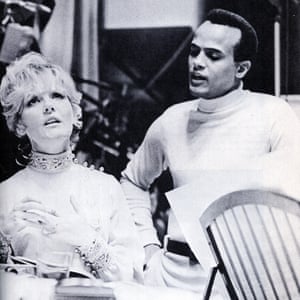 “That was the best take. That was the way that the song was supposed to be done – with that feeling, that emotion. When it turned into this whole race thing – it sounds silly, but I didn’t quite understand what it was about.” Her career decisions were handled by other people; Clark says it is “probably true” that she could have benefited from being more involved. Performing in Montreal in 1969, she was heckled for singing in English and French – she had not been advised that a separatist movement was under way. Distraught, Clark sought advice from John Lennon, who was in Montreal for a bed-in with Yoko Ono. She recalls turning up at the door of their hotel suite, snivelling, in the middle of a downpour. Lennon welcomed her warmly. “They were both still in their nighties. I sat there, dripping water all over their bed, and told them the story. He said: ‘Oh, fuck ’em.’ I said: ‘Thank you, John.’” Lennon was happy to play therapist, she says. “He was so funny and very philosophical. We had a chat about the situation. Did it really matter? ‘This too shall pass.’ That sort of stuff. Then he said: ‘I tell you what – you need a drink’. Which was very true.” There was a crowd in the next room, among them Allen Ginsberg, Timothy Leary and one of the Smothers Brothers – “but no drugs”, she adds, firmly. Someone handed her a lyric sheet, and she joined the group in singing “a simple little melody: ‘All we are saying, is give peace a chance.’ I don’t think any of us knew we were being recorded.” Clark was a pop artist, never part of the counterculture. “I was on the edge of it quite often. There used to be some parties in LA where all you had to do was walk in and that was it, you were stoned from the moment you took a breath.” She wasn’t interested in drugs, feeling “a certain responsibility” to her family. “I touched a little bit of it – it never impressed me at all. And I saw too much of the damage it was doing.” 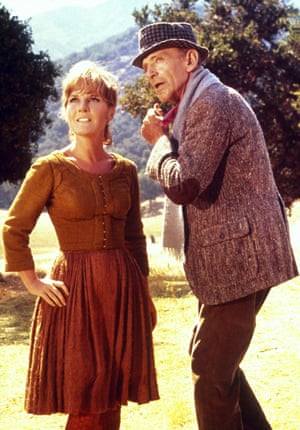 Advertisement One of Clark’s great friends was Karen Carpenter, who she met in Los Angeles at the 1969 premiere of Goodbye, Mr Chips, in which Clark starred alongside Peter O’Toole. The Carpenters, then unsigned, were performing at the afterparty. Impressed, Clark introduced herself and pointed them out to Herb Alpert, who went on to sign them to A&M. She did not run into Karen often, but “we had that connection, so that every time we did see each other, we were close”. When Clark and Carpenter – then the two “top girls” of the world of pop – met Elvis Presley in his dressing room after a show, he angled for a threesome, she says. “He was raring to go. Karen was lovely, but she was kind of innocent. I felt sort of responsible for her, so I got her out of there. Then I looked round, and Elvis was at the door, and he looked at me, like: ‘I’m going to get you one day.’” But he never did, she tells my voice recorder directly. “Some people think he did. I think he put out the rumour that he did. But he didn’t.” Any regrets? “I didn’t find him that attractive,” she says apparently offhandedly. But when I ask what period of Elvis it was, she jumps at the implication. “Oh, it was when he was at his best! But he was almost too much.” After Carpenter died from complications resulting from anorexia in 1983, Clark paid tribute to her “very dear friend” and her “strange, tragic end” at the Royal Albert Hall. “It was awful,” she says now. “I remember from the first time I met her, I saw the different phases of this thing, I could sense that something was going on. She got into that Beverly Hills thing, of being skinny.” Clark worked in the studio with Richard Carpenter after his sister’s death. “I think he was still trying to find someone to replace her – he never will. But he was a hard taskmaster.” She whistles, rolls her eyes. “I think that was probably the secret to it. Not a lot of fun, no – but very, very clever.” Clark says she only had a “nightmare session” with one producer: Bob Crewe. “He just wanted to make me sound different.” The music industry has come under a lot of scrutiny, for sexual harassment and abuse – did she ever feel vulnerable, especially as a young woman? She considers the question carefully. Women have changed; the world has, too. “I’ve come across all that stuff, of course.” She pauses for a long time. “I don’t want to get into that,” she says softly, almost to herself. Then she recaptures her train of thought. “It’s right that women should come out and say what has to be said. It’s still a world that’s controlled by men. I think the world would be very different if more women were in power.” Clark was first discovered at age nine on It’s All Yours, a BBC show that broadcast children’s messages for the troops. When rehearsal was interrupted by an air raid, Clark volunteered to sing to settle the jittery audience. She found herself on stage, standing on a box to reach a big, old-fashioned microphone – the first she had ever sung into, in front of the first orchestra she had ever seen. “I sang, and the orchestra joined in – just like in a movie. That was the beginning, really.” Advertisement Billed as “Britain’s Shirley Temple” and “the Singing Sweetheart”, Clark went on to record hundreds of songs for the forces and toured the UK by train. She recalls sleeping in the luggage racks alongside Julie Andrews, three years her senior. “Now, she could really sing,” says Clark. “We’d get off the train, do our little things, get back on and go home. It was fun – and not a lot of kids were having fun.” 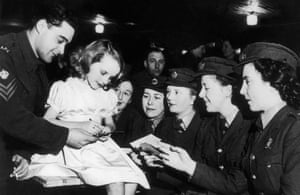 Advertisement Vera Lynn was “the Forces’ Sweetheart”, and Clark was their “Little Girl”, representing the children they had left behind. She was a good-luck charm for the troops, her picture plastered on tanks. “I was sweet and had a sweet little voice – that was all that was asked of me, really.” But her education suffered; when she did make it to school, she was bullied for being famous. Aged about 12, Clark was contracted as an actor by the Rank Organisation, Britain’s largest film company, and remained there through her teenage years. She wanted to be Ingrid Bergman, but there were no roles for adolescents. Her chest was bound as late as age 16, to protect her image as a child star in ankle socks. “I think I was part of a moment in people’s wartime lives that they wanted to keep precious,” she says. “Me becoming a woman – they didn’t want to see that.” But Clark was growing up and wanted to sing more grown-up songs. “And, of course, as soon as I did anything like that, we’d get letters coming in: ‘We don’t want Our Pet singing about LOVE’. What was I supposed to sing? The Little Shoemaker for ever?” It was a desperately unhappy time – she has said she came close to a breakdown – compounded by her fraught relationship with her father Leslie, who was also her manager and a frustrated actor. “He enjoyed the so-called glamour of it, probably more than I did, and I think he could see me slipping away. It was not easy, for either of us.” Clark eventually terminated their relationship, which, she says firmly, was “necessary, but not easy”. Does she feel any resentment towards him? She is quiet, stops and starts. “I adored my father. He was my idol for many, many years. This is hard for me to talk about.” There was “nothing weird going on”, she adds hurriedly; “but when we parted, it was very, very painful”. Advertisement She was also dismayed to discover that she was broke, her finances having been handled for her during her entire career. “That was a surprise, put it that way.” But she had two hit records, With All My Heart (1957) and Alone (1958), and, together with her sister, was able to pull together enough for the two of them to rent a flat in London. Now in her mid-20s, Clark was independent for the first time in her life – she got herself a pink sports car, and “several boyfriends”. Then she was called across the Channel by her record company, which was irked that a French singer, Dalida, had had some success covering Clark’s songs. After a successful show at the Olympia theatre in Paris, she was persuaded to record in French by the promise of spending time with the record company’s “gorgeous” PR man, Claude Wolff. “They said: ‘He’ll be taking you around.’ Ça change tout.” You knew what you wanted when you saw it, I say. “I didn’t know I was going to get married to him!” she says. “But he was kind of dishy.” Clark couldn’t speak French, Wolff couldn’t speak English, and he had an “extremely beautiful” girlfriend (“I couldn’t stand her”). But at the end of her three weeks in Paris, the night before she was due to go back to London, Wolff came to her hotel. “He said: ‘You come with me’ – dot dot dot.” After a long-distance love affair between London and Paris, they decided that she would move to Paris, where her career was taking off. The British press was resentful, accused her of running away from her past. Clark is adamant: she left England because she wanted to be with the man she loved. But “it was nice to get away from being ‘Our Pet’. The great thing about becoming a star in France was they knew nothing about my past. They thought I was sexy. I thought that was pretty great!” 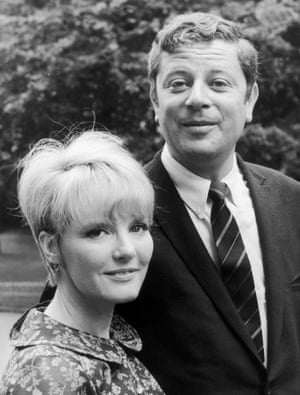 Clark with her husband Claude Wolff in 1966. Photograph: Gamma-Keystone via Getty Images Clark with her husband Claude Wolff in 1966. Photograph: Gamma-Keystone via Getty ImagesHer marriage to Wolff was unusually feminist for the time: “It was a partnership.” They had two daughters and a son. Clark has spoken often with regret about her “mother’s guilt”, believing she handled neither parenthood nor her career as well as she could have – a concern she has expressed to her children. “They say: ‘What are you talking about? We had a great time.’” Wolff and nannies shouldered the burden, but it required compromise all round, she says, personally and professionally. “They weren’t always easy choices – and leaving the children was always traumatic.” Clark and Wolff have been married 58 years and continue to live together in Geneva – but now lead mostly separate lives. They have “drifted apart”, says Clark, gently: “He has his life and I have mine. How can you talk about that? Personal relationships are complicated, and it’s very difficult to explain that to the world.” Is she happy? She sounds surprised to be asked, stops and starts with her answer. “Um, yeah. You know, happiness – I actually wrote a song called Happiness.” She pauses, and it takes me a moment to realise that she is quoting song lyrics. “It comes and goes, it’s like a summer rose, and we settle for contentment and the status quo – and suddenly it’s there again.” Advertisement A complete recording of Petula Clark’s 1974 Valentine’s Day concert at the Royal Albert Hall will be released later this year. • This article was amended on 31 July 2019. An earlier version included a picture of Barbara Hancock in Finian’s Rainbow, miscaptioned as Petula Clark, and has now been replaced. More people in Spain…... like you, are reading and supporting The Guardian’s independent, investigative journalism than ever before. And unlike many new organisations, we have chosen an approach that allows us to keep our journalism accessible to all, regardless of where they live or what they can afford. But we need your ongoing support to keep working as we do. The Guardian will engage with the most critical issues of our time – from the escalating climate catastrophe to widespread inequality to the influence of big tech on our lives. At a time when factual information is a necessity, we believe that each of us, around the world, deserves access to accurate reporting with integrity at its heart. Our editorial independence means we set our own agenda and voice our own opinions. Guardian journalism is free from commercial and political bias and not influenced by billionaire owners or shareholders. This means we can give a voice to those less heard, explore where others turn away, and rigorously challenge those in power. We need your support to keep delivering quality journalism, to maintain our openness and to protect our precious independence. Every reader contribution, big or small, is so valuable. Suppo ESPAÑA MI NATURA |


| You are subscribed to email updates from antonioparragalindo.blogspot.com. To stop receiving these emails, you may unsubscribe now. | Email delivery powered by Google |
| Google, 1600 Amphitheatre Parkway, Mountain View, CA 94043, United States | |


